
Wu-She Incident
Causes of Wu-She Incident
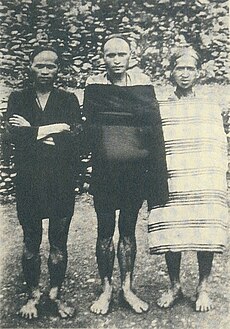
The Wu-she Incident occurred in 1930 as an indigenous uprising against Japanese rule in the Wu-she region of Taiwan. The immediate trigger was a conflict that arose during a drinking ceremony. Since 1897, Japan’s land surveys and suppression efforts had continuously encroached upon the indigenous way of life. After several unsuccessful attempts at resistance, Mona Rudao decided to launch a third uprising in 1930 after Japanese police officer Yoshimura insulted his son. Mona Rudao secretly gathered warriors from seven of the twelve tribal communities and chose the day of the Wushe sports event as the moment to strike.
During The Incident
- On October 27, the attack was launched, resulting in the deaths of 134 Japanese individuals.
- The operation was carried out in three stages:
- Attacking the Japanese police station and seizing weapons.
- Cutting off Wushe’s external communications.
- Finally, launching a surprise assault on Japanese police officers and civilians at the sports event venue.
Aftermath of The Incident
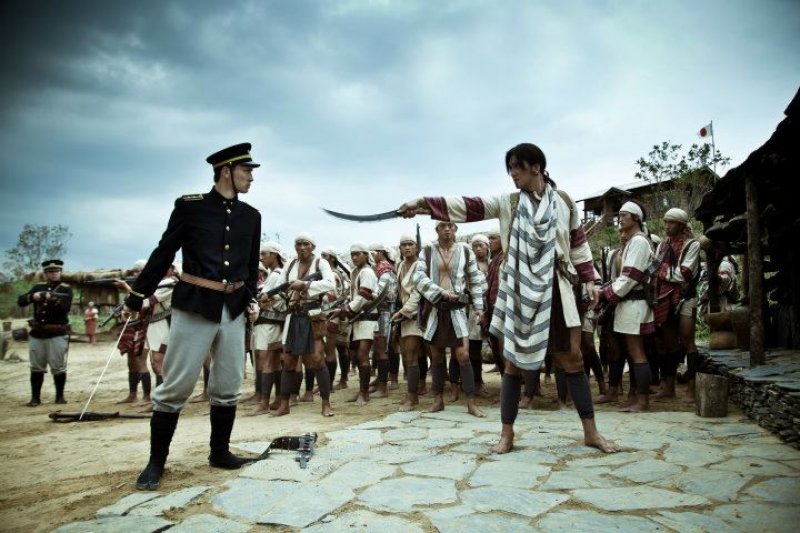
Starting on October 28, the Japanese forces intensified their reinforcements and launched a full-scale suppression on October 31. They used mustard gas and other chemical weapons against the indigenous people, causing heavy casualties. In the end, Mona Rudao was killed in battle. The incident concluded with the suicide of Dadao Mona.
Mona Rudao's Image In The Community
Under the portrayal in the film, Mona Rudao is deeply ingrained in the public’s mind as a brave and heroic figure. However, in the eyes of the Atayal people, he is seen as a traitor who collaborated with the Japanese. According to the account of Atayal elder Suyama Valang, Mona Rudao massacred 26 elderly, women, and children a year before the Wushe Incident. In the context of that time, conflicts and hostilities often arose between neighboring tribes. The Seediq tribe, being adjacent to the Atayal tribe, maintained a hostile relationship with them. The Japanese exploited this animosity, using the “divide and conquer” strategy to incite conflicts between the tribes. This weakened the indigenous tribes’ power and reduced the chances of collaboration, making it easier for the Japanese to maintain control. Walisi Baring, the convener of the Seediq National Assembly, also admitted to this massacre.
At the time, the Wulai-Lima tribe was one of the three Atayal tribes. Because they refused to submit to the Japanese, the Japanese exploited the hatred between the Seediq and Atayal tribes and incited Mona Rudao. Under Japanese encouragement, Mona Rudao, while the Atayal men were out hunting, led his people and the Japanese to raid the Atayal tribe. They attacked the village and killed the elderly, women, and children left in the village. Few survivors remained in the village after the attack. Following this, Mona Rudao led over a hundred people to launch another assault on the Wulai-Lima tribe. The two sides clashed in the mountainous region, a terrain easy to defend but difficult to attack. With the help of six strong men and the terrain, the Atayal people successfully escaped. During this battle, Mona Rudao was injured, leaving a scar on his cheek from a bullet. This conflict became known as the Qing Shan Incident.
The Atayal elders who participated in this battle expressed their disapproval of Mona Rudao. Despite this, they believed that the Seediq were forced into such actions and chose not to pursue the matter further. Later, scholars pointed out, “In earlier years, Mona Rudao often led the Japanese to attack other tribes, advancing from the north to the south along the Central Mountain Range, and from high altitudes to low altitudes. Many older Atayal people are aware of this history.” Although Mona Rudao committed numerous wrongdoings, in the context of that time, for the survival of his people, it is believed that anyone would have made the same choice.